-
 Call Now:
8010 552 552
Call Now:
8010 552 552
-
 Whatsapp Now:
8010 552 552
Whatsapp Now:
8010 552 552
-
 Email Me:
[email protected]
Email Me:
[email protected]
Call Now:
8010 552 552
Whatsapp Now:
8010 552 552
Email Me:
[email protected]

Have you recently undergone surgery for a pilonidal sinus and are wondering how to recover quickly with no complications? If this is the case, you are not alone. There are thousands of individuals who get relief from laser procedures, which are the most effective treatment option available today for this condition.
However, what patients need to know is that successful treatment outcomes are not only about the surgical procedure but rather begin afterwards.
The days and weeks following the surgery are what matter when it comes to a safe and fast recovery. The choices you make regarding maintaining the proper diet, eating the right kind of foods, and the lifestyle play a vital role in preventing the recurrence of the condition and ensuring long-term well-being.
In this write-up, we will guide you on the dietary measures, hygienic practices and lifestyle modifications following laser surgery for pilonidal sinus for a smooth healing period.
A pilonidal sinus is a small cyst or abscess that looks similar to a pimple found in the cleft at the top of the buttocks. It is an acquired condition that is characterised by trapping of hair beneath the skin fold.
Over time, the trapped hair, along with the dead skin, leads to a foreign reaction resulting in inflammation. Eventually, it gives rise to the formation of a sinus tract, which gets filled with pus and becomes red and swollen.
For individuals with a pilonidal sinus, the condition is extremely painful, making everyday activities quite difficult.
Modern treatment approaches include laser surgery for pilonidal sinus. It has become the preferred method due to its non-invasive nature, lesser post-operative pain and faster recovery period with negligible chance of complications.
During the procedure, a small incision is made to allow the laser probe to be inserted and destroy the lining of the sinus tract with the abnormal tissues. The process also seals or closes off the tract to prevent it from reopening.
As mentioned, laser surgery offers several advantages over conventional methods. Here are some of the following.
It is to be noted that even with these advantages, postoperative care is of utmost importance. It is your everyday diet, hygiene and lifestyle that influence the success of the procedure.
If you are not aware of the post-surgical guidelines after laser surgery for pilonidal sinus, you might unknowingly increase the chance of delayed healing.
Eating a well-balanced and nutritious diet is essential for promoting tissue repair after pilonidal sinus surgery. Patients are always advised to focus on digestible meals that boost immunity and prevent constipation, which can strain the surgical site.
To aid recovery, it is recommended to include the following foods.
Let’s look at the foods that you avoid or limit in consumption.
The surgical area after laser surgery for a pilonidal sinus is prone to sweating and bacterial growth. Hence, maintaining hygiene is important to avoid its recurrence.
Hair removal: Ingrown hair is one of the major causes of pilonidal sinus. Hence, make sure to shave the area around the buttocks to reduce the risk of trapped hair.
Daily cleaning: Don’t forget to clean the area with mild antiseptic soap. However, avoid using harsh chemicals or scrubbing the area. After washing, pat the site dry with a towel.
Keep the area dry: Always wear breathable cotton undergarments and loose-fitting clothing. Also, make sure to change your innerwear, especially after heavy sweating.
Even after successful laser surgery for a pilonidal sinus, the condition can again come back if healthy lifestyle changes are not adopted.
Maintain a healthy weight: Obesity is the main reason behind the increase in friction and sweating near the tailbone, which eventually leads to infection. Hence, adopt a moderate exercise routine that fits your needs for weight loss.
Stay active: Following the surgical intervention, it is advisable to engage in mild physical activities that help with blood circulation. Start with slow walks and gradually move to running, jogging and yoga upon the doctor’s suggestion.
Avoid prolonged sitting: Sitting for long hours puts direct pressure on the surgical area and can slow wound healing. If your job involves desk work, try to take short breaks every 30–45 minutes or use a soft cushion while sitting.
Watch out for the following signs after surgical intervention.
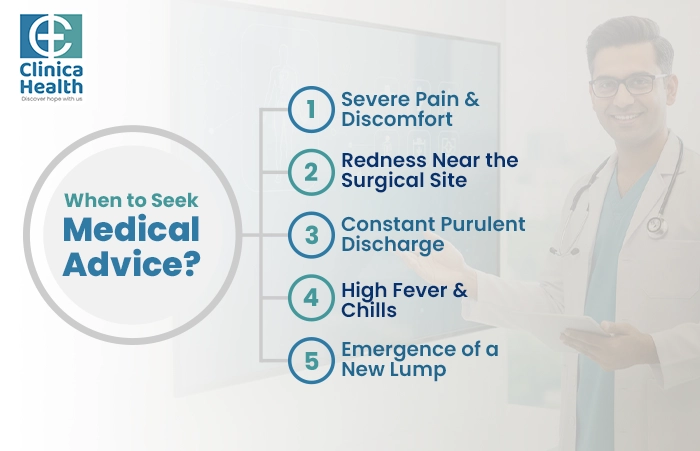
If any of these symptoms do not improve, don’t ignore them. Immediately consult a healthcare provider for timely management.
Recovering from a pilonidal sinus does not end with surgical intervention. Modern laser surgery for pilonidal sinus helps to provide relief from the symptoms of the condition. It is the right diet, hygiene, and lifestyle habits that matter for healing and helping to stay healthy.

Qualifications:
MBBS(Hons), MS(Surgery), FACS(USA), MRCS (Edinburgh), MRCPS (Glasgow), FMAS(Minimal Access Surgery), FALS(Colo-rectal surgery), FIAGES(Gastrointestinal Endo surgery), FAIS CC Laser proctology (Poland), CC Laparoscopic Hernia Surgery, Advanced Laparoscopy, GI & GI Onco and Laser surgeon