-
 Call Now:
8010 552 552
-
 Whatsapp Now:
8010 552 552
-
 Email Me:
[email protected]
Call Now:
8010 552 552
Whatsapp Now:
8010 552 552
Email Me:
[email protected]

Heartburn after a heavy meal is something many people experience quite often. However, when the discomfort becomes frequent enough that it wakes you up at midnight, the symptom is something to pay attention to. What usually happens in such situations?
You sit upright for some time, sip some water, and take another antacid. By morning, the discomfort goes away, but it returns. If you are familiar with the cycle, you are most probably suffering from gastroesophageal reflux disease (GERD), which is not improving with medicines.
For many patients, over-the-counter medications like proton pump inhibitors (PPIs) and other acid-reducing medicines give relief but only for a time. Most of the time, the reflux keeps coming back.
So, the medicines actually become a lifelong dependency rather than a solution.
If that describes you, the next question that comes is what is the treatment approach when GERD refuses to settle with tablets? Can GERD laparoscopic surgery provide permanent relief?
In this write-up, Dr. Purnendu Bhowmik explains why some patients with acid reflux sometimes refuse to respond to medicines, the warning signs that suggest surgery is important, and how GERD laparoscopic surgery, a minimally invasive option, offers a lasting cure.
The concern arises when these symptoms do not respond to dietary changes, lifestyle modifications, and medicines. If left unaddressed, the symptoms lead to damage to the esophagus.
At the lower end of your esophagus lies a ring of muscle called the lower esophageal sphincter (LES). It works like a one-way valve that allows food to pass into the stomach and then closes it to prevent contents from flowing back up
But in patients with GERD, this valve is weak or does not relax properly. It might also happen that a hiatal hernia is present, due to which a part of the stomach slides up through the diaphragm opening into the chest, making the valve even less effective.
The problem with medicines is that they treat the acid reflux but not the cause.
So, even if the acidic contents are well controlled, food, liquid, bile, and gas continue to travel upward. This causes regurgitation, a sour or bitter taste, throat irritation, and cough.
Medicines work far better for heartburn than for regurgitation. Moreover, genetic differences have an impact on how an individual responds to proton pump inhibitors (PPIs).
Hence, medicines actually suppress the severity of the acid but do not treat the root cause. Therefore, when the problem lies with the lower esophageal sphincter (LES), GERD laparoscopic surgery is the most effective method to treat the condition.
Not everyone with GERD needs surgical intervention. Dr. Purnendu Bhowmik lists certain symptoms that indicate that GERD laparoscopic surgery is worth considering.
If you have taken the prescribed proton pump inhibitors(PPIs) as instructed at the right time in the correct dosage for two months or more but continue to suffer from heartburn, it is a sign that medications are not enough.
Long-term consumption of proton pump inhibitors(PPIs) causes side effects such as constipation, diarrhoea, nausea, headaches and abdominal discomfort. So, surgery is recommended as an alternative to reduce dependence on tablets.
Severe GERD is one of the reasons behind the rise of complications such as esophagitis (inflammation or erosions of the esophagus), a narrowing (stricture), bleeding, or Barrett's esophagus (a change in the esophageal lining), which means that the disease is progressing.
Sometimes, patients experience chronic cough, recurrent chest infections, wheezing, hoarseness, or asthma-like symptoms due to constant stomach contents coming up. Medicines usually do not help such individuals, and the only way to stop further worsening of the respiratory problems is to opt for GERD laparoscopic surgery.
GERD laparoscopic surgery, also known as laparoscopic fundoplication, is a minimally invasive approach to improve acid-reflux symptoms.
During the procedure, the surgeon wraps the upper part of the stomach around the lower portion of the oesophagus. The surgeon makes small cuts in the abdomen through which a camera and fine instruments are inserted to operate while viewing magnified images on a monitor.
The goal of the surgical intervention is to strengthen the barrier between the stomach and esophagus to reduce the backward flow of stomach contents, allowing normal swallowing.
Laparoscopic fundoplication is considered the gold-standard surgical treatment for GERD, with studies reporting success rates in the range of 80 to 95 per cent.
According to medical reports, nearly 90 per cent of the patients say that they are happy with the procedure. Most patients enjoy complete relief from the symptoms for up to 20 years or even more, with a few rare cases experiencing only rare or occasional symptoms.
However, the success rate depends on the experience of the surgeon, the severity of the condition and the patient’s overall health condition.
GERD laparoscopic surgery comes with several advantages, which are as follows:
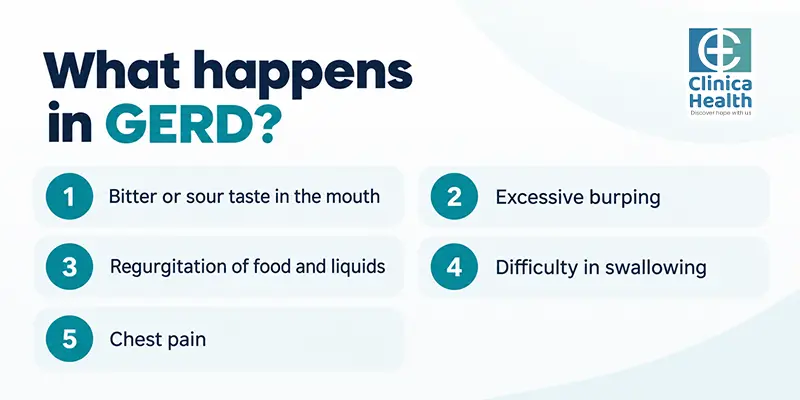
Living with persistent heartburn is extremely troublesome and interferes with daily activities. If your reflux is not going away with medicines, make sure to schedule an appointment with Dr. Purnendu Bhowmik.
He carefully assesses each case individually and determines if GERD laparoscopic surgery is truly the best option to help you lead a life free from heartburn and constant intake of medicines.
Qualifications:
MBBS(Hons), MS(Surgery), FACS(USA), MRCS (Edinburgh), MRCPS (Glasgow), FMAS(Minimal Access Surgery), FALS(Colo-rectal surgery), FIAGES(Gastrointestinal Endo surgery), FAIS CC Laser proctology (Poland), CC Laparoscopic Hernia Surgery, Advanced Laparoscopy, GI & GI Onco and Laser surgeon