-
 Call Now:
8010 552 552
Call Now:
8010 552 552
-
 Whatsapp Now:
8010 552 552
Whatsapp Now:
8010 552 552
-
 Email Me:
[email protected]
Email Me:
[email protected]
Call Now:
8010 552 552
Whatsapp Now:
8010 552 552
Email Me:
[email protected]

You are going through the discomfort and pain of a pilonidal sinus. Sitting becomes extremely uncomfortable, infections come back, and daily life feels restricted. Why?
Just because you have developed a pilonidal sinus, you then opted to undergo modern treatment solutions to get relief, and that is laser surgery for a pilonidal sinus.
It is a modern, minimally invasive treatment approach which provides quick relief from the symptoms of the condition. But a question still lingers in the minds of the patients, “Will it come back again?”
The idea of a painful condition recurring after surgery is quite distressing and feels frustrating. The anxiety is not just pain but the whole cycle of severe discomfort, drainage, and again undergoing a procedure.
Let’s read this blog post to find out whether a pilonidal sinus has a chance of recurrence and how to reduce its chance of coming back.
Before we delve into the recurrence rates of pilonidal sinus, let’s understand what the condition is.
Pilonidal sinus is an acquired condition that is caused by the trapping of hair inside the skin fold, primarily found in the cleft at the top of the buttocks. At times, the sinus looks like a small dimple without any such symptoms.
A pilonidal sinus is not only caused by hair trapping but also by dust and debris accumulation, which eventually leads to a foreign body reaction, resulting in a cyst. Over time, the cyst gets infected and gives rise to an abscess (a pus-filled cavity), which ruptures and forms a discharging sinus (pilonidal sinus), says Dr. Purnendu Bhowmik, the best pilonidal sinus doctor in Kolkata.
One of the causes of a pilonidal sinus is prolonged hours of sitting. Hence, the disease was primarily considered the “Truck driver’s disease” or “Jeep Driver’s disease".
The term originated during World War 2 when a large number of soldiers, particularly those who used to drive jeeps, developed painful cysts near the tailbone.
Today, a pilonidal sinus can affect anyone, especially those individuals who lead a sedentary lifestyle without any physical activity, like office workers, students and drivers.
Thankfully, the disease can now be treated with minimally invasive solutions like laser surgery for pilonidal sinus that offer several advantages.
Several risk factors make an individual more susceptible to developing a pilonidal sinus.
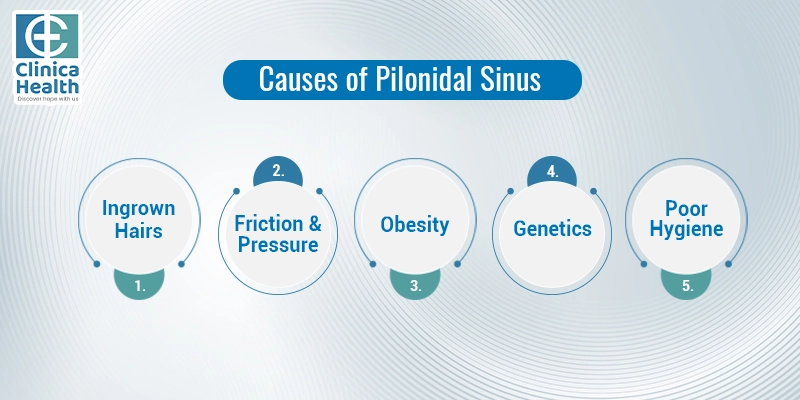
Ingrown Hairs: When loose hairs penetrate the skin, it triggers inflammation and an immune response, leading to a cyst.
Friction and Pressure: Continuous ribbing and repetitive movements force the hair and debris to penetrate below the skin and increase the chance of a pilonidal sinus.
Obesity: Excessive skin folds can trap hair, debris, and sweat, which is a conducive environment to the development of a pilonidal sinus.
Genetics: Some people have a naturally deeper natal cleft, which makes them more prone to developing a pilonidal sinus.
Poor Hygiene: Inadequate cleaning and accumulation of sweat, dirt, and hair in the area can promote infection and sinus formation.
A pilonidal sinus can occur in many ways, depending on whether it is acute or chronic. Dr. Purnendu Bhowmik lists some of the signs which most patients commonly experience.
Laser treatment for pilonidal sinus is a modern and new treatment approach. One of the reasons behind the popularity of laser treatment is that traditional open surgeries leave behind large open wounds and take a longer recovery period.
However, during the laser procedure, the surgeon uses high-energy laser beams to destroy the sinus tract from within.
The surgeon first cleans the sinus tract by removing hair, debris, and infected tissue. A specialised laser fibre is then inserted into the tract, which destroys the lining of the sinus and seals the tract from the inside. This helps eliminate the disease while minimising damage to the surrounding healthy tissue.
Here are the benefits of laser surgery for pilonidal sinus.
A common concern which patients have about laser surgery for pilonidal sinus is whether the procedure prevents the disease from coming back.
Recurrence is always a possibility with pilonidal disease, but laser surgery has shown promising results in reducing this risk compared to traditional wide excision surgery.
According to Dr. Purnendu Bhowmik, the recurrence rate after pilonidal sinus is very low and significantly depends on the experience of the surgeon, the complexity of the sinus, and patient adherence to postoperative care.
Dr. Bhowmik lists several factors that contribute to the recurrence of pilonidal sinus.
Incomplete removal of the sinus tract: If any portion of the sinus is left behind, there is a high chance of inflammation and infection occurring again.
Poor Post-Operative Care: Neglecting hygiene, wound cleaning, and follow-up visits increases the possibility of the condition recurring.
Persistent Risk Factors: If any patient falls under certain risk categories, like excessive hair growth, prolonged sitting and obesity.
Laser surgery for pilonidal sinus is effective but definitely not a permanent cure. Long-term effects depend on the lifestyle modifications after the surgery to maintain the results.
Some patients experience recurrence of the pilonidal sinus soon after the treatment or even years later. Dr. Purnedu Bhowmik suggests some techniques to prevent the condition from recurring.
Keep the buttock area clean: Maintain proper hygiene of the area, especially after sweating, to reduce hair accumulation and bacterial growth.
Lose weight: Maintain a healthy weight to prevent pressure on the sacrococcygeal region.
Avoid Sitting for Long Hours: Take frequent breaks to stand and stretch, which reduces pressure on the tailbone, thereby minimising friction.
Shave the hair around your buttocks regularly: if you have excessive hair growth, opt for removal either by shaving, depilatory creams or laser hair reduction at regular intervals. This can help prevent hair from penetrating the skin and forming a new sinus.
The possibility of recurrence after laser surgery for pilonidal sinus is a valid concern for many patients. Though there is no surgical procedure that guarantees 100% prevention of recurrence, laser surgery greatly reduces the risk of complications.
All you need to do is get in touch with an experienced surgeon like Dr. Purnendu Bhowmik for surgical precision and long-term success.

Qualifications:
MBBS(Hons), MS(Surgery), FACS(USA), MRCS (Edinburgh), MRCPS (Glasgow), FMAS(Minimal Access Surgery), FALS(Colo-rectal surgery), FIAGES(Gastrointestinal Endo surgery), FAIS CC Laser proctology (Poland), CC Laparoscopic Hernia Surgery, Advanced Laparoscopy, GI & GI Onco and Laser surgeon