Is It Okay to Delay Gallbladder Surgery?
Do you often feel recurring abdominal pain that particularly flares up after eating heavy meals? For many patients with gallstones, infection of the gallbladder or gallstone pancreatitis, the symptoms remain silent for years and explode into severe pain and complications.
In the initial stage, the discomfort might come and go as well as be usually managed with medications. As a result, many patients assume that it is okay to delay surgical intervention. But is it harmless to postpone gallbladder surgery?
Let’s know what Dr. Purnendu Bhowmik, a well-recognised gallbladder surgeon in Kolkata, has to say on this question.
What’s The Role Of The Gallbladder?
The gallbladder is a small, pear-shaped organ that is tucked beneath the liver on the right side of the abdomen. Its primary role is to store bile, a digestive fluid that helps to break down fats to ease digestion.
Whenever you eat a meal, particularly one with fats, the gallbladder contracts and releases bile into the small intestine through the bile ducts. The gallbladder controls the amount of fat released into the small intestine, which makes digestion more effective while reducing the workload on the liver.
Without the gallbladder, the bile continuously drips into the small intestine, thereby leading to difficulty in the digestion of fats.
What Are Gallstones?
Gallstones are hardened deposits that form inside the gallbladder when the bile becomes imbalanced. Normally, the bile contains cholesterol, bile salts, and bilirubin in the right proportions.
When these components get disturbed, the substances get crystallised and form hardened deposits. Gallstones vary in size and number. They can be as small as a grain of sand or as large as a pebble. Some individuals can have one stone or even multiple stones.
Complications When Gallstones Are Left Untreated?
Dr. Purnendu Bhowmik, the best gallbladder surgeon in Kolkata, states that there are many patients who continue to live with gallstones for a long period of time. This is primarily because most of the time, they are asymptomatic, or even if the symptoms appear, they are mild and occasional.
What many patients don’t know is that over time, the presence of gallstones leads to many complications, such as the following.
It is the infection of the gallbladder, often due to the presence of gallstones blocking the cystic duct, which results in bile build-up. The condition can cause severe pain, fever, and abdominal tenderness.
It occurs when an impacted gallstone blocks the ducts that drain the pancreas. This causes the pancreas to become inflamed, causing abdominal pain, rapid heart rate, and high fever.
Although rare, gallbladder cancer can occur, especially in older age. Gallbladder cancer can cause attacks of biliary pain, yellowing of the skin, and unexplained weight loss.
Prolonged obstruction and infection may lead to pus collection (empyema) or tissue death (gangrene) in the gallbladder. It is a medical emergency requiring urgent treatment.
Understanding Gallbladder Surgery And When It Is Recommended?
Gallbladder surgery, better known as cholecystectomy, is one of the safest and most effective procedures that involves the removal of the gallbladder to treat conditions related to the organ. It is mainly carried out in one of the following ways.
Open Cholecystectomy:
Your healthcare provider might suggest an open cholecystectomy (open surgery). The procedure requires a large incision and is mostly recommended in patients with serious gallbladder issues like inflammation, scarring, and infections.
Laparoscopic Cholecystectomy:
Nowadays, most of the gallbladder surgeons prefer laparoscopic cholecystectomy. The operation is minimally invasive and involves a small incision, resulting in quick recovery, less pain, and smaller scars.
Doctors usually recommend gallbladder surgery in cases of
- Recurrent gallbladder attacks
- Chronic inflammation
- Gallbladder rupture and other complications
Is It Okay To Wait For Gallbladder Surgery?
As the best gallbladder surgeon in Kolkata, Dr. Purnendu Bhowmik suggests waiting for surgical intervention only if the symptoms are mild and infrequent and can be managed with lifestyle changes.
Moreover, in certain situations, gallbladder surgery also becomes medically necessary. This includes.
- Pregnancy: Delaying surgery is required until after delivery to avoid invasive approaches.
- High-risk patients: Patients with serious health conditions related to the heart and lungs are asked to wait for some time until the conditions stabilise.
Even in these cases, it is suggested that you attend regular follow-ups with your doctor to remain under close supervision and care.
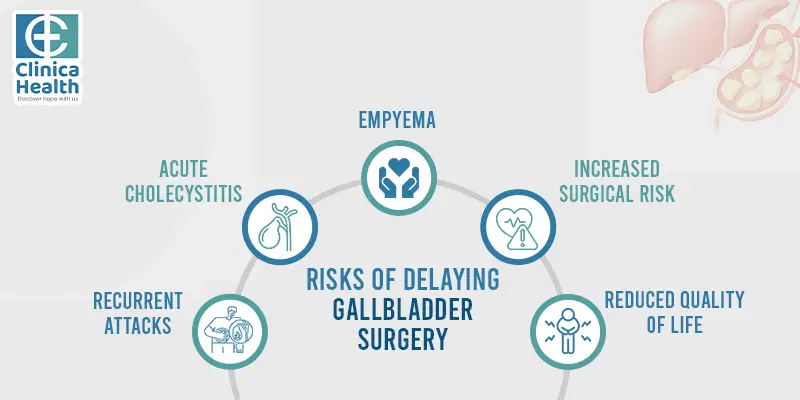
Risks Of Delaying Gallbladder Surgery
Remember that it is okay to wait for the gallbladder surgery for the time being, but not for too long. Avoiding necessary surgical intervention leads to potential complications like the following.
- Recurrent attacks: Gallstone attacks worsen over time and become more severe and intense.
- Acute cholecystitis: Blocked bile ducts caused by gallbladder stones cause sudden inflammation and infection, resulting in pain and high fever.
- Empyema: Untreated infection fills the gallbladder with pus, leading to rupture and sepsis.
- Increased surgical risk: Emergency surgeries for complicated conditions carry a high risk of complications, longer hospital stays, and a difficult recovery period.
- Reduced quality of life: Constant pain and dietary restrictions affect daily life activities.
Can Diet And Medications Replace Gallbladder Surgery?
Dietary precautions combined with medications can help relieve the pain and discomfort temporarily. They do not remove the existing stones or prevent future stone formation. As a result, there is a likelihood that symptoms might return. In such situations, gallbladder surgery remains the only effective and permanent solution.
Is It Possible To Live Without A Gallbladder?
Yes, it is completely possible to live without a gallbladder. The only difference is that after surgery, the bile directly goes into the intestine instead of being stored.
Most patients usually experience little or no digestive issues. Some temporary problems include mild bloating, loose stools, or difficulty in digesting fatty foods, says Dr. Purnendu Bhowmik, the best gallbladder surgeon in Kolkata.
However, these issues are temporary and usually resolve within a few weeks as soon as the body starts adjusting to living without a gallbladder.
Conclusion
So, is it okay to delay gallbladder surgery? The answer actually depends on your symptoms, health status, and medical advice. For patients with mild symptoms, a short-term delay can be considered. But chronic pain and complications demand timely intervention. Hence, it is advisable to consult a trusted gallbladder surgeon in Kolkata, like Dr. Purnendu Bhowmik, who ensures accurate diagnosis and treatment for long-term health.
 Call Now:
7595 838 844
8010 552 552
Call Now:
7595 838 844
8010 552 552
 Whatsapp Now:
8010 552 552
Whatsapp Now:
8010 552 552
 Email Me:
[email protected]
Email Me:
[email protected]
