-
 Call Now:
8010 552 552
Call Now:
8010 552 552
-
 Whatsapp Now:
8010 552 552
Whatsapp Now:
8010 552 552
-
 Email Me:
[email protected]
Email Me:
[email protected]
Call Now:
8010 552 552
Whatsapp Now:
8010 552 552
Email Me:
[email protected]

Achalasia cardia is a less common but life-altering condition that impacts daily life. The disorder affects the esophagus, i.e., the muscular tube that carries the food from the mouth to the stomach.
For patients suffering from persistent swallowing difficulty, chest discomfort and regurgitation, modern achalasia cardia treatment, like the laparoscopic method, provides relief from the symptoms.
It is a minimally invasive technique that offers a long-term solution to restore swallowing more effectively than temporary approaches such as balloon dilatation.
Dr. Purnendu Bhowmik, a specialist in treating achalasia cardia, provides insights on how the procedure works and why it is considered a preferred option over traditional therapies.
In healthy individuals, the lower esophageal sphincter (LES), a muscular valve at the junction of the esophagus and stomach, usually relaxes during swallowing to let the food and liquids pass through and immediately contracts again to seal the stomach.
In patients with achalasia cardia, the mechanism fails due to nerve degeneration, resulting in the esophagal wall losing functional activity.
Eventually, this condition leads to progressive difficulty in swallowing, poor nutrition and weight loss when left untreated.
The symptoms of achalasia cardia do not develop all of a sudden. They tend to affect individuals over months or years. Sometimes, individuals also mistake the signs for acid reflux or other digestive disorders, especially during the early years.
Patients who have been experiencing these symptoms for quite a long time should get themselves evaluated by an achalasia cardia surgeon like Dr. Purnendu Bhowmik for an improved treatment outcome.
Before recommending the most appropriate achalasia cardia treatment, healthcare professionals conduct several tests to confirm the diagnosis.
Upper endoscopy: The procedure involves using a tiny camera at the end of a flexible tube to rule out structural abnormalities in the esophagus.
Esophageal manometry: It measures how well the muscles are contracting in the esophagus during swallowing.
Barium swallow X-ray: The test is conducted after drinking a chalky liquid known as barium, which coats the inside lining of the digestive tract and fills the digestive organs. This coating allows the doctors to view the esophagus, stomach and upper intestine.
Functional luminal imaging probe (FLIP) technology: It is a minimally invasive balloon-based endoscopic tool to find how easily and widely the esophagogastric junction (EGJ) opens.
Once the cause is confirmed, achalasia cardia treatment approach focuses on reducing the abnormal pressure on the lower esophageal sphincter and making swallowing easier.
The most effective, safe, and long-term treatment for achalasia cardia is a laparoscopic Heller's myotomy. It is the most popular achalasia cardia treatment because of improved morbidity and quicker recovery time.
The procedure is performed using laparoscopic techniques, which means tiny incisions are made to cut the thickened muscle of the lower esophageal sphincter so food can easily pass into the stomach.
It is then followed by partial fundoplication, which is performed by wrapping a portion of the stomach around the lower esophagus to minimise postoperative acid reflux.
The success of laparoscopic Heller's myotomy lies in its ability to completely divide the LES circular muscle fibre, combined with an anti-reflux procedure to prevent post-operative heartburn.
Whenever an individual suffers from achalasia cardia, the LES fails to relax because the nerve cells that tell the muscles to open are either damaged or closed.
As a result, the esophagus acts like a closed door or a blocked pipe, causing the foods and liquids to accumulate and leading to symptoms such as difficulty in swallowing and regurgitation.
Traditional approaches like pneumatic dilatation stretch the LES temporarily, which again gets tightened over time. However, achalasia cardia treatment involving laparoscopic Heller's myotomy takes a different approach.
The procedure permanently divides the muscle fibres that are responsible for the blockage. This, in turn, lowers the resistance at the junction of the esophagus and stomach.
While there is no cure to reverse the damaged nerves, reducing the obstruction allows the food to pass through the stomach more efficiently. As a result, patients experience smoother swallowing, reduced regurgitation, improved nutrition, and a much better quality of life.
There are several achalasia cardia treatment modalities.
Pharmacotherapy: They are generally temporary options and slightly relax the LES. Medicines provide limited benefit and rarely control symptoms in moderate cases.
Botox Injections: The technique involves pushing a maximum of 100 units of botulinum toxin to temporarily relax the LES by weakening the muscles.
Pneumatic Dilation: It is the most effective non-invasive treatment where a balloon is inflated and inserted to stretch the LES muscles. However, the results are for the time being, and the muscles tend to regain their tightness.
Laparoscopic Heller's myotomy offers several benefits over conventional methods. Dr. Purnendu Bhowmik states some of the following.
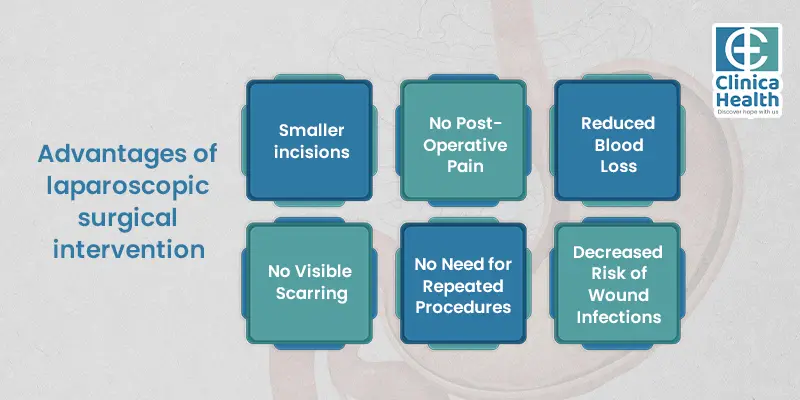
Recovery after laparoscopic Heller's myotomy is usually faster than with the open method. Patients are able to return to their daily activities within a few days. Complete healing usually takes a few weeks, although swallowing difficulties start improving one or two days after the surgery.
A shorter healing time is probably one of the advantages of laparoscopic achalasia cardia treatment. However, Dr. Purnendu Bhomwik advises patients to adhere to post-operative instructions regarding diet, exercise and pain management.
Achalasia cardia is a progressive swallowing disorder. Fortunately, advancements in achalasia cardia treatment have made it possible for patients to restore the ability to swallow comfortably and regain better control of their lives.
You can book your appointment with Dr. Purnendu Bhowmik for accurate treatment approaches.
Qualifications:
MBBS(Hons), MS(Surgery), FACS(USA), MRCS (Edinburgh), MRCPS (Glasgow), FMAS(Minimal Access Surgery), FALS(Colo-rectal surgery), FIAGES(Gastrointestinal Endo surgery), FAIS CC Laser proctology (Poland), CC Laparoscopic Hernia Surgery, Advanced Laparoscopy, GI & GI Onco and Laser surgeon