Risks Involved in Rectal Prolapse Surgery
Living with a condition where part of the rectum slips out of the anus, causing discomfort, is actually more of an embarrassment for individuals than a difficulty with daily activities.
The rectal prolapse is a condition that affects thousands of individuals, with surgery as the only effective treatment. However, what seems to provide relief from the inconvenience comes with its own set of risks.
Yes, that’s true. Like any other surgical intervention, traditional rectal prolapse surgery is not without complications. Hence, patients who require to undergo the surgical intervention for rectal prolapse need to be aware of the risks involved, just as they need to know its benefits to get relief from the condition.
Being informed about the procedure before undergoing the technique is essential to prepare for the recovery process and recognise the warning signs post-operation.
This write-up explores some of the possible complications associated with rectal prolapse surgery and even discusses any other treatment approaches available that are safe and equally effective.
What Is Rectal Prolapse?
Rectal prolapse is a condition where the rectum (the last portion of the large intestine) loses its attachments and protrudes through the anus. In some individuals, the protrusion occurs only during bowel movements, whereas in severe cases, the slipped-out part can remain outside permanently.
Individuals with rectal prolapse always notice a bulge at the anal opening, which appears as a red, fleshy mass leading to extreme discomfort.
There are typically 3 types of rectal prolapse.
- The whole rectum protrudes out of the anus.
- The rectal lining is only partially pushed into the anus.
- The rectum begins to descend, but it does not stretch beyond the anus.
What Are The Signs That Indicate Rectal Prolapse?
Rectal prolapse usually appears differently in different people. However, Dr. Purnendu Bhowmik, the best surgeon for carrying out rectal prolapse surgery, lists the following symptoms which most patients are likely to experience.
- A red and fleshy mass hanging out of the anus
- A feeling of pressure in the anal area
- Leakage of stool, mucus and blood due to weakening of the anal muscles.
- Severe anal pain and itching
- A lump that worsens when standing or coughing
If you or someone else is experiencing these signs for a long time, don’t hesitate to opt for early consultation and treatment. Dr.Purnendu Bhowmik always advises individuals to get themselves screened in the initial stage to ensure a successful treatment outcome.
Rectal Prolapse Surgery: An Overview
The main aim of rectal prolapse surgery is to reposition the detached rectum to its normal place and secure it to prevent further recurrence.
The two common approaches include
- Perineal repair procedure
- Abdominal repair procedure
Let’s know in detail about each of the methods.
Perineal (Rectal) Repair Procedure:
The prevalent approaches under this category include the following:
Altemeir procedure: What happens
The surgeon removes the portion of the rectum that has prolapsed outside the anus.
The remaining rectum is then stitched to the anal canal.
Delorme procedure: What happens
Only the inner mucosal lining of the prolapsed rectum is removed.
The outer muscular layer is folded and stitched to reinforce strength.
The cut ends of the mucosal lining are stitched together.
Abdominal Repair Procedure
Abdominal repair is a major surgical approach to treating rectal prolapse. It involves making an opening in the abdominal muscle wall and securing the protruded rectum after repair to prevent further prolapse.
Techniques Used In This Type Of Rectal Prolapse Surgery
Open Surgery
A large incision is made in the abdomen.
Provides direct visibility and access to the rectum.
Typically used in complex cases, but involves a longer recovery.
Laparoscopic Surgery
Small incisions are made in the abdomen.
A laparoscope (a thin tube with a camera) guides the surgeon.
Less invasive, shorter hospital stay, faster recovery, and reduced pain compared to open surgery.
Approaches under this category include
- Rectopexy: It is a method where the rectum is cut from the surrounding tissue and then fixed to the sacrum using mesh. It can be done either by the open or the laparoscopic method.
- Resection: This is done when the situation is difficult. Here, the affected portion of the rectum is removed, and the healthy tissues are stitched. Rectopexy is then performed to secure the rectum to the sacrum.
What Are The Risks Involved In Rectal Prolapse Surgery?
Rectal prolapse surgery is absolutely safe, especially when the procedure is minimally invasive, like a laparoscopic procedure, and performed by an experienced surgeon, such as Dr. Purnendu Bhowmik.
Nevertheless, the technique carries potential complications, especially if the method is traditional.
Infection: At times, infections occur at the surgical site or internally and need to be treated immediately with antibiotics. Symptoms include fever, redness and swelling.
Bleeding: A small amount of blood clot is quite normal during the procedure; however, excessive bleeding is a matter of serious concern.
Recurrence: If the prolapse is not repaired, there is a chance that the condition will recur in the future, resulting in the same symptoms.
Changes in bowel movement: Patients might experience difficulty in emptying the bowel. If it continues for weeks, consult your doctor immediately.
Injury to nearby organs: During the surgery, the surrounding organs, such as the stomach, bladder or intestines, can be affected.
Reaction to anaesthesia: Common side effects are nausea, vomiting, dizziness and allergy.
Gangrene: Though rare, there can also be death of rectal tissue.
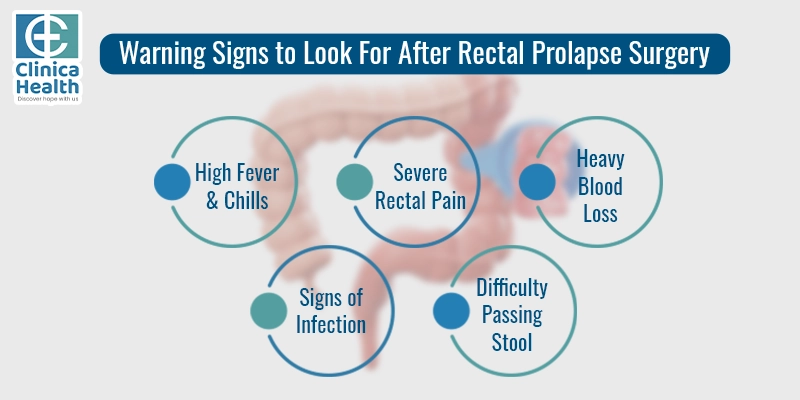
Warning Signs To Look For After Rectal Prolapse Surgery
Dr. Purnendu Bhowmik advises every patient to seek urgent medical attention if they experience the following signs.
- High fever and chills
- Severe rectal pain
- Heavy blood loss
- Difficulty passing stool
- Signs of infection
Conclusion
Rectal prolapse surgery remains the most effective treatment option to get long-lasting relief from the condition. Although postoperative complications can take place, they are generally low when performed by a skilled surgeon.
With the post-surgical care and open communication, it is possible to get relief from rectal prolapse and get back to normal living.
 Call Now:
7595 838 844
8010 552 552
Call Now:
7595 838 844
8010 552 552
 Whatsapp Now:
8010 552 552
Whatsapp Now:
8010 552 552
 Email Me:
[email protected]
Email Me:
[email protected]
