Top 5 Questions to Ask Your Surgeon Before Colorectal Surgery
Undergoing colorectal cancer surgery is not just about removing the malignant cells from the colon or the rectum. It also involves getting back to normal living, preventing recurrence and ensuring the best quality of life afterwards without any such complications.
Yet, some patients walk into the operating room without knowing anything about the procedure and are unsure of what lies ahead. Whether you are diagnosed with colorectal cancer or preparing for a scheduled procedure, it is completely normal to experience fear and confusion.
Having a detailed conversation with your surgeon is advisable, as it can significantly shape your recovery and give you confidence. Dr. Purnendu Bhowmik, a leading expert in performing colorectal cancer surgery, always encourages patients to ask necessary questions so that they are informed about their health and know what to expect.
If you are thinking what to ask, here are the top 5 questions which you can discuss with your surgeon. This blog also provides clear and easy answers to help you feel prepared for the journey ahead.
What Questions To Ask Your Colorectal Cancer Surgeon
- What type of surgical approach do I need and why?
Not all types of colorectal cancer surgeries are the same. Depending on the individual's location, stage, and overall well-being, your surgeon might recommend the following approaches.
Laparotomy: Also known as the open method, the surgeon makes large incisions in the abdomen to operate. The technique is most often recommended for complex or advanced cases where better visualisation is important.
Laparoscopy: Here, the surgeon makes small incisions through which a laparoscope with a camera attached and other specialised instruments are inserted to remove the cancerous cells. This results in less pain, shorter hospital stays, smaller scars and faster recovery.
Robotic: It is an advanced form of minimally invasive surgery where the surgeon uses a robotic system to control highly precise instruments. It offers enhanced visualisation, flexibility, and accuracy—especially useful in delicate cases, allowing for quicker recovery and reduced post-operative discomfort.
Don’t hesitate to ask which type of surgery is best suited for your case and whether minimally invasive alternatives are appropriate for your needs.
- Will I require a stoma (colostomy or ileostomy)?
The most common concern that patients have before colorectal cancer surgery is whether they need a stoma, a surgically created opening in the abdomen that allows waste to pass through a bag. Depending on your condition, the surgeon might suggest that the patient might need a colostomy (bringing part of the colon to the abdominal surface) or an ileostomy (bringing the end of the small intestine to the surface).
In many cases, a stoma is temporary and is removed after healing. However, when a large portion of the rectum is excised, the stoma might be permanent. Understanding this in advance helps the patient to prepare emotionally and make the transition smoother.
- Are there any risks or complications after colorectal cancer surgery?
Every surgery carries risk, and colorectal cancer surgery is no exception. Some common complications include infections at the surgical site, excessive bleeding, damage to the surrounding organs, leakage at the surgical site and even bowel obstructions. These risks are rare and only happen when performed by an inexperienced surgeon. Still, it is better to be informed about what could happen if something goes wrong.
Dr. Purnendu Bhowmik takes time to explain to the patients about the potential risks based on their age group. When an individual is informed about the warning signs after colorectal cancer surgery, they become more conscious of seeking medical attention as early as possible.
- What are the chances of my cure?
The goal of colorectal cancer surgery is not just about removing the cancer cells. It is about increasing the long-term survival rate and improving the lives of the patients. Ask your surgeon if you need any further treatments after undergoing colorectal cancer surgery, like chemotherapy or radiation therapy.
Moreover, don’t forget to enquire about the follow-up appointments and the need to undergo additional colonoscopies to improve the long-term survival rate. Remember that colorectal cancer, when detected at the early stage, has an excellent prognosis and a significantly higher chance of treatment as compared to the advanced stage.
- What should I expect during the recovery period?
Recovery is what most patients ignore, which can drastically impact how smoothly they heal. Just like the surgical intervention, the recovery process is equally important to prevent complications. The recovery timeline is not the same for all patients and usually depends on the stage and overall health of the patients.
Ask your surgeon about the lifestyle changes, dietary changes, duration of the hospital stay, and need for any other physical therapy. You should enquire about the pain medication strategies, wound care and signs of complications.
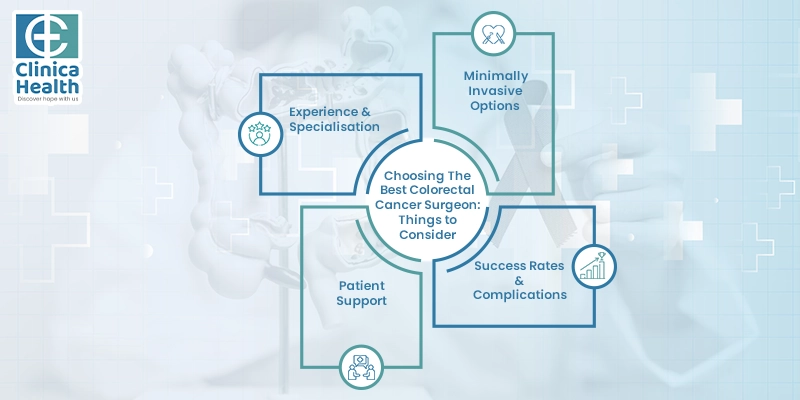
Choosing The Best Colorectal Cancer Surgeon: Things To Consider
Undergoing treatment from the best colorectal cancer surgeon can significantly affect outcomes. Here are key factors to consider.
- Experience and specialisation
Look for a surgeon who has the required expertise to perform advanced colorectal cancer procedures, especially for managing complex cases like Stage III or IV.
- Minimally invasive options
Modern colorectal cancer surgery involves minimally invasive procedures like laparoscopy and robotic techniques that offer several advantages. Always choose a surgeon who has expertise in these approaches.
- Success rates and complications
Try to find out about the surgeon’s previous track record, including success rates, complication rates, and post-operative recovery outcomes. Get in touch with a surgeon who prioritises patient safety and long-term recovery of the patients.
A reliable surgeon always takes time to explain the procedure, answer questions, and provide guidance throughout the treatment journey. Clear communication builds trust and reduces anxiety before surgery.
Conclusion
By asking these five questions, patients can gain clarity and prepare themselves before colorectal cancer surgery. Informed patients take proactive steps about their health and recover better. So, don’t hesitate, write down your concerns, and make sure your concerns are addressed so that you feel ready.
You can book your appointment with Dr. Purnendu Bhowmik. He is a trusted doctor for colorectal cancer surgery, providing expert care according to the patient’s needs to ensure the best outcomes.
 Call Now:
8010 552 552
7595 888 444
Call Now:
8010 552 552
7595 888 444
 Whatsapp Now:
8010 552 552
Whatsapp Now:
8010 552 552
 Email Me:
[email protected]
Email Me:
[email protected]
