-
 Call Now:
8010 552 552
Call Now:
8010 552 552
-
 Whatsapp Now:
8010 552 552
Whatsapp Now:
8010 552 552
-
 Email Me:
[email protected]
Email Me:
[email protected]
Call Now:
8010 552 552
Whatsapp Now:
8010 552 552
Email Me:
[email protected]

Do you often experience persistent and sharp abdominal pain accompanied by nausea and vomiting? For many patients, these symptoms signify gallbladder issues, primarily gallstones or cholecystitis.
The only way to get rid of the discomfort and troublesome symptoms of gallbladder problems is surgical intervention. Gallbladder removal surgery, or cholecystectomy, is a safe and effective procedure performed on many patients.
Laparoscopic technique has emerged as the standard to remove the gallbladder. It is commonly preferred by many patients due to its minimally invasive nature and faster recovery.
But just like other surgeries, both traditional and laparoscopic gallbladder removal procedures carry risks only if performed by an inexperienced surgeon.
Dr Purnendu Bhowmik, the best gallbladder surgeon in Kolkata, lists some common complications that patients may face in rare cases.
Let’s take a look at some of the common post-surgical complications following gallbladder removal surgery.
Infections at the surgical site are quite prevalent, especially if the wound is exposed to dust and dirt. Signs include redness and swelling at the incision site, fever, and pus discharge. Mild infections can be managed with antibiotics, but severe cases require drainage or additional medical intervention.
Some patients experience excessive bleeding both during and after the surgery. This primarily occurs due to damage to the surrounding tissues, blood clots, and underlying conditions. Internal bleeding may not be immediately visible but requires immediate monitoring. The key signs include swelling, discharge from the surgical site or a drop in blood pressure. In severe cases, blood transfusion might be necessary.
Accidental damage to the bile ducts is one of the most serious complications of gallbladder removal surgery. It mainly happens due to the unclear anatomy of the gallbladder during the procedure. When not recognised at the right time, long-term side effects include bile leaking and narrowing of the bile ducts, also known as strictures.
It involves inflammation of the abdominal wall due to constant leakage of bile from the biliary system, often resulting in irritation and infection. Symptoms include severe abdominal pain, fever, nausea and vomiting. The condition requires monitoring from an experienced gallbladder surgeon in Kolkata, like Dr. Purnendu Bhowmik, to address the issue and ensure timely management.
The gallbladder is located near important organs like the liver, duodenum and intestines. During the surgical intervention, when performed incorrectly, there is a slight risk of injury to these organs. Though rare, the complication can result in internal injury and additional surgical intervention.
Blood clots, or more specifically, Deep Vein Thrombosis (DVT), are another major risk of gallbladder removal surgery, particularly in the legs. In some individuals, these clots often travel to the lungs, resulting in a life-threatening condition called pulmonary embolism. If you experience severe chest pain, shortness of breath, irregular heartbeat or coughing of blood, book an appointment with a gallbladder surgeon in Kolkata. At times, patients are prescribed blood-thinning medicines to reduce this post-surgical risk.
The gallbladder is responsible for storing bile, which helps in the digestion of fats. After its removal, the bile is directly released to the intestines, which affects digestion. Hence, patients after cholecystectomy often complain of bloating, loose stools, increased bowel movements and difficulty in digesting fatty foods. However, these changes are temporary and usually get resolved once the body adapts to living without the gallbladder.
After gallbladder removal surgery, patients can become prone to developing post-cholecystectomy syndrome. They experience bloating, diarrhoea, indigestion and abdominal discomfort. These symptoms mostly occur due to changes in bile flow or existing digestive issues. A simple dietary change or lifestyle modifications, as advised by your gallbladder surgeon, provide great relief.
Incisional hernia can develop in patients after undergoing laparoscopic gallbladder removal surgery. This happens when the tissues push through a weak spot in the abdominal wall at the incision sites. Such individuals experience a visible bulge near the incision with severe pain, which increases during coughing or lifting heavy objects.
Before gallbladder removal surgery, patients are usually sedated to reduce discomfort during the operation. However, anaesthesia carries its own risk. Common side effects include nausea, vomiting, dizziness, sore throat, and drowsiness after the procedure. Patients may experience allergic reactions, breathing difficulties, or fluctuations in blood pressure. Although serious complications are rare, careful monitoring helps ensure patient safety throughout the surgery and recovery period.
As the best gallbladder surgeon in Kolkata, Dr. Purnendu Bhowmik lists certain factors that increase the risk of post-surgical complications after gallbladder removal surgery.
Such patients often require a thorough examination before the operation to eliminate the risks.
Yes, patients can avoid post-operative complications after gallbladder removal surgery to a great extent by keeping in mind the following factors.
Consult an experienced gallbladder surgeon in Kolkata, like Dr. Purnendu Bhowmik.
Follow your doctor’s instructions diligently.
Remember that complications can’t be fully eliminated. These measures can reduce the risk and ensure early diagnosis for effective treatment outcomes.
After gallbladder removal surgery, it is important to monitor the signs of healing and recognise the warning signs. Here are the signs that you must not ignore.
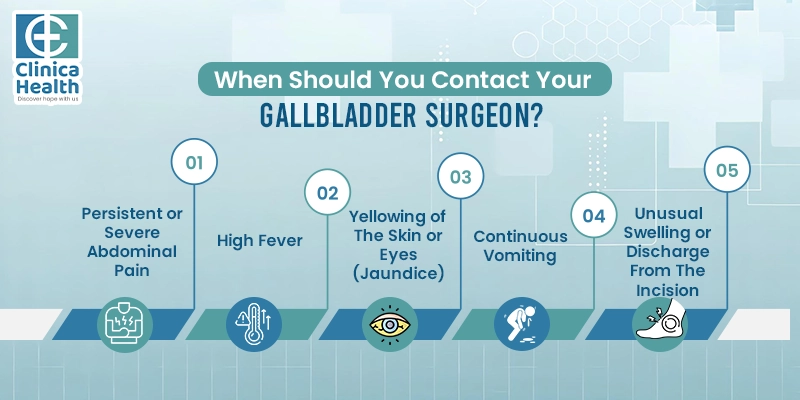
Take prompt medical attention to prevent worsening of these symptoms.
Gallbladder removal surgery is generally a safe procedure to get relief from gallbladder issues. While complications are rare, being aware of the post-surgical risks can help patients to take early action and seek medical advice immediately.
Always keep in mind to book an appointment with a gallbladder surgeon in Kolkata, like Dr. Purnendu Bhowmik, who specialises in laparoscopic cholecystectomy, offering a high success rate with a quick return to daily activities.
Qualifications:
MBBS(Hons), MS(Surgery), FACS(USA), MRCS (Edinburgh), MRCPS (Glasgow), FMAS(Minimal Access Surgery), FALS(Colo-rectal surgery), FIAGES(Gastrointestinal Endo surgery), FAIS CC Laser proctology (Poland), CC Laparoscopic Hernia Surgery, Advanced Laparoscopy, GI & GI Onco and Laser surgeon