-
 Call Now:
8010 552 552
Call Now:
8010 552 552
-
 Whatsapp Now:
8010 552 552
Whatsapp Now:
8010 552 552
-
 Email Me:
[email protected]
Email Me:
[email protected]
Call Now:
8010 552 552
Whatsapp Now:
8010 552 552
Email Me:
[email protected]

Getting diagnosed with colorectal cancer can naturally make an individual feel panicked. However, advancements in colorectal cancer surgery, especially minimally invasive techniques, have led to improved treatment outcomes and increased survival rates.
A recent development in the field of oncology is the laparoscopic method to perform surgical intervention. The approach not only kills the cancer cells effectively but also reduces the physical trauma to the body.
But for many patients, the thought of going under the knife can be frightening. Understanding what to expect before, during and after the procedure can help patients prepare for the surgery and somewhat reduce the anxiety.
This guide explains the process of minimally invasive colorectal cancer surgery, highlights the benefits of the laparoscopic procedure and explains the importance of choosing a surgeon with advanced surgical training, such as fellowship programs like FALS (Fellowship in Advanced Laparoscopic Surgery), which can contribute to improved outcomes. It also acknowledges the clinical contributions of surgeons such as Dr. Purnendu Bhowmik in advancing colorectal cancer care.
Minimally invasive colorectal cancer surgery refers to a procedure that is performed to remove the cancerous cells from the colon and rectum through small incisions using a laparoscope equipped with a camera and other surgical instruments. The surgeon provides a view of the abdomen on a high-definition monitor, thereby allowing precise removal of diseased tissue.
One of the important aspects of colorectal cancer surgery is the removal of the nearby lymph nodes, which are examined under a microscope to determine if the cancer cells have spread beyond the primary tumour.
Not all patients require the same colorectal cancer surgery approach. Several factors determine whether an individual should consider the procedure. Dr. Purnendu Bhowmik, a renowned surgeon specialising in colorectal cancer surgery, checks the following:
Dr. Purnendu Bhowmik conducts a thorough assessment to prepare the safest and most effective treatment modality.
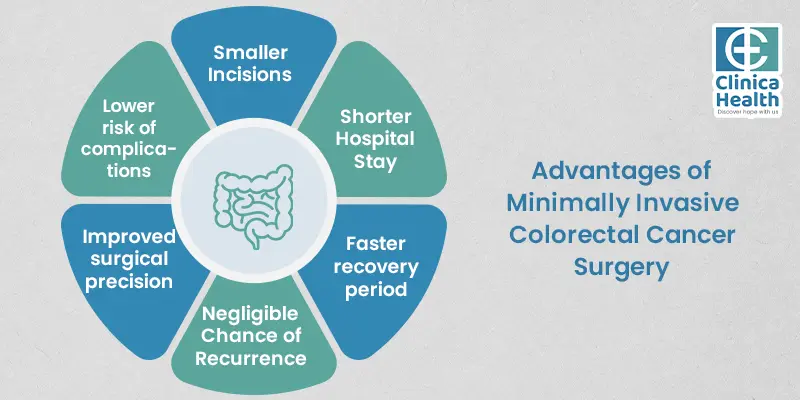
Laparoscopic colorectal cancer surgery has transformed the way these types of cancers are treated. This approach offers various advantages over traditional surgical interventions with the same goal of cancer removal.
Dr. Purnendu Bhowmik believes that patient education is extremely crucial before colorectal cancer surgery to reduce anxiety, improve treatment compliance and help prevent complications. Here is what individuals can expect.
Dr. Purnendu Bhowmik reviews the patient's medical history, imaging scans, colonoscopy findings, biopsy reports, and blood tests to determine the stage and location of the cancer. After that, patients are given guidelines that they must adhere to for a successful outcome.
For example, patients are asked to do the following:
On the day of the colorectal cancer surgery, patients are given anaesthesia so that they can remain asleep throughout the procedure. Dr. Purnendu Bhowmik then makes four to five smaller incisions in the abdomen.
The laparoscope is then inserted through one of the incisions to get a view of the internal organs. Once the cancerous cells are removed, the healthy ends of the intestine are joined together in a process called anastomosis.
After the procedure, Dr. Purnendu Bhowmik gives post-operative instructions to patients to promote quick and safe healing.
The success of a colorectal cancer surgery depends on the expertise of the surgeon. Make sure to choose a surgeon who has completed advanced fellowship programmes such as the Fellowship in Advanced Laparoscopic Surgery (FALS).
Surgeons with FALS are trained to perform complex colorectal cancer cases with minimally invasive techniques. During the fellowship, surgeons gain extensive experience in advanced laparoscopic skills and accurate tissue dissection to treat challenging colorectal cases. This allows the surgeons to remove tumours while minimising damage to surrounding healthy tissues.
Dr.Purnendu Bhowmik is one of the leading gastrointestinal & advanced laparoscopic & laser surgeons in Kolkata. After completing his Master's (MS) in General Surgery from Calcutta National Medical College & Hospital (CNMC&H), he had the opportunity to undergo a fellowship in minimal access surgery (FMAS, AMASI).
Then he underwent a Fellowship in Advanced Laparoscopic Surgery (FALS) in New Delhi. This has equipped him with a patient-centric approach for colorectal cancer care. Patients feel confident under his guidance that they are receiving the right care, such as the successful removal of cancerous cells and enhanced recovery.
Modern minimally invasive techniques like laparoscopic colorectal cancer surgery have represented a major leap in patient care for those suffering from this deadly disease. Individuals can receive an effective cancer treatment with minimal disruption to their daily lives.
Furthermore, the involvement of fellowship-trained surgeons, particularly those with advanced training like FALS, such as Dr Purnendu Bhowmik, ensures that treatment options are individualised for increased survival chances.
Qualifications:
MBBS(Hons), MS(Surgery), FACS(USA), MRCS (Edinburgh), MRCPS (Glasgow), FMAS(Minimal Access Surgery), FALS(Colo-rectal surgery), FIAGES(Gastrointestinal Endo surgery), FAIS CC Laser proctology (Poland), CC Laparoscopic Hernia Surgery, Advanced Laparoscopy, GI & GI Onco and Laser surgeon